
Champaign 24-Hour Feed Is Absent
No Champaign County sheriff or Tri-County Regional Jail page publishes an official rolling release list for the prior day. The jail's public portal is titled Persons Currently In Custody. Its own scope is limited to people currently confined at the participating facility. The page offers name and alphabet searches behind a human security check. It also identifies TRI-JAIL, the jail phone, the current population, an update time, and a 30-minute update interval.
That update interval is only the cadence for the live custody data. It is not a 30-minute archive, a release delay, or proof that a removed name was released. No recent-release tab, past-inmate control, release-date field, or public retention period was found on the landing interface. A person may vanish after bond or sentence completion, but also after transfer to ODRC, another county, WCCCF, USMS, or ICE. The completed release sheet and court record distinguish those events.
Request Champaign Same-Day Release Records
The strongest local route is a request to Tri-County Regional Jail for an existing release log or specific booking and release sheet. Define the start and end date, time, and time zone. A narrow request helps staff locate an existing record and avoids asking the jail to create a new report. For one person, include the full name, booking number if known, and approximate booking date.
- Check the current Tri-County roster and record the displayed update time.
- Call Tri-County at 937-834-5000 and ask which custodian holds release entries for the exact interval.
- Request the release date and time, disposition, releasing authority, bond notation, and transfer destination where public.
- Check Ohio VINE for a transmitted custody event, then compare the Municipal or Common Pleas court docket.
- If the record shows a state-prison commitment, use the Ohio DRC Offender Search instead of calling the transfer a community release.
Ask for existing records. If records are organized by booking number rather than by release interval, refine the request to the named booking or ask how the custodian indexes release sheets. Ohio's Public Records Act provides a framework for inspection and copies and contemplates help with an ambiguous or overly broad request. No special Champaign fee or guaranteed response time for a release log was found, so do not assume either.
For a named-person path that spans local, state, and federal systems, use the Champaign County released-inmate search guide. It explains how the last custodian controls which record should be checked.
Champaign 24-Hour Record Fields
Because there is no public same-day feed, these are fields to request from the jail record, not fields claimed to appear online. Together they answer identity, event, legal authority, and destination.
| Field | What it establishes |
|---|---|
| Full name and booking number | Links the event to the correct local booking. |
| Booking date and time | Sets the start of the documented jail stay. |
| Physical release date and time | Shows when jail processing ended for that booking. |
| Release disposition or type | May distinguish bond, dismissal, time served, sentence end, or transfer. |
| Releasing authority | Identifies the court or agency behind the movement. |
| Transfer destination | Shows whether custody continued with another institution or agency. |
| Bond and charges at release | Connects the custody event to the case without proving its final outcome. |
The court docket adds the legal context. Municipal Court handles misdemeanors, traffic matters, and early felony proceedings. Common Pleas handles adult felony outcomes. A docket may show a bond order, dismissal, sentence, jail credit, community control, or ODRC commitment. The jail sheet is still needed for the physical time of departure because a court order can precede holds review, property return, and discharge processing.
Champaign Bond Does Not Prove Release
Champaign Municipal Court publishes an effective 2026 criminal and traffic bond schedule. It lists set amounts by offense level and includes special conditions for some cases. The schedule is useful for understanding what a court may initially require, yet a listed amount does not show that bond was posted. It also does not establish that the jail finished a same-day release.
A proper check pairs the court entry with the Tri-County event. Another hold may remain after one case permits bond. The person could also be sent to another custodian. Ask for the release disposition and destination, then read the docket for the authorizing order. This makes the bond schedule a source of legal context, not a substitute for the release record.
Note: A court order and physical jail departure can carry different timestamps because release processing takes time.
Read Champaign Custody Scope Carefully
The official current-custody portal shows why it cannot serve as a released-last-24-hours archive.
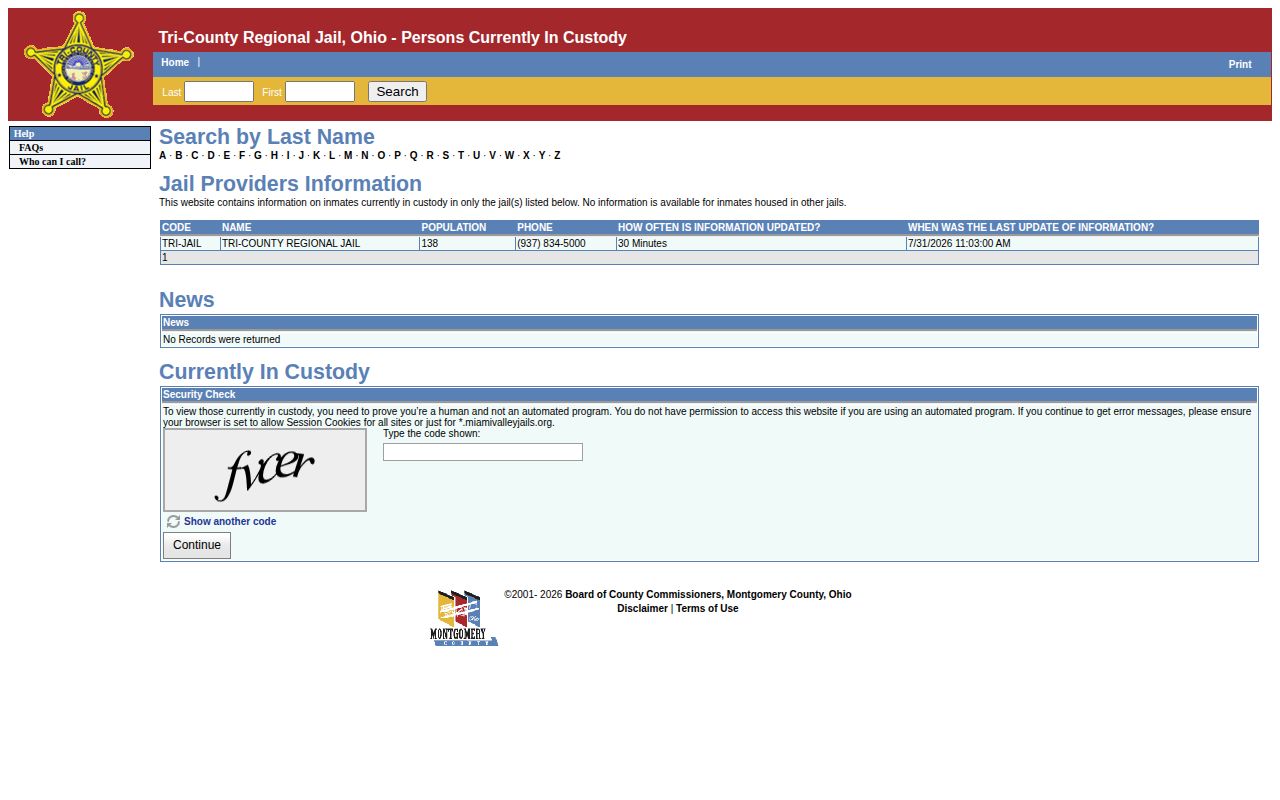
The scope label, update interval, and security step support a narrow reading. Presence means the person is listed in current custody at the time shown. Absence only means the portal did not return that person in its current scope. Save the time of access, check spelling and aliases, and seek an affirmative event through the jail, VINE, or the proper court.
Verify Champaign Release Events
Tri-County's official VINE instructions list release, transfer, escape, return after escape or re-arrest, and death as custody changes. That event range is valuable because it prevents every roster removal from being labeled a release. Search Ohio VINELink by name or ID, match the facility and identifiers, and read the transmitted status. VINE is a notification feed, not a certified jail release sheet, so confirm the event with Tri-County and the docket.
State and federal records cover different people. A transfer into an Ohio prison belongs in the DRC Offender Search, where an incarcerated status is not release. A later state-prison departure may appear as Released or APA Supervision with release detail. A federal sentence uses the BOP locator and federal docket. ICE and USMS handoffs likewise require their agency records. None of those systems is a substitute for a Tri-County booking release.
Champaign Sheriff App Has Limits
The sheriff promotes a mobile app as an outreach tool for reports, tips, and public-safety information. The official Google Play listing does not promise a released-history screen, a 24-hour archive, or retained booking photos.
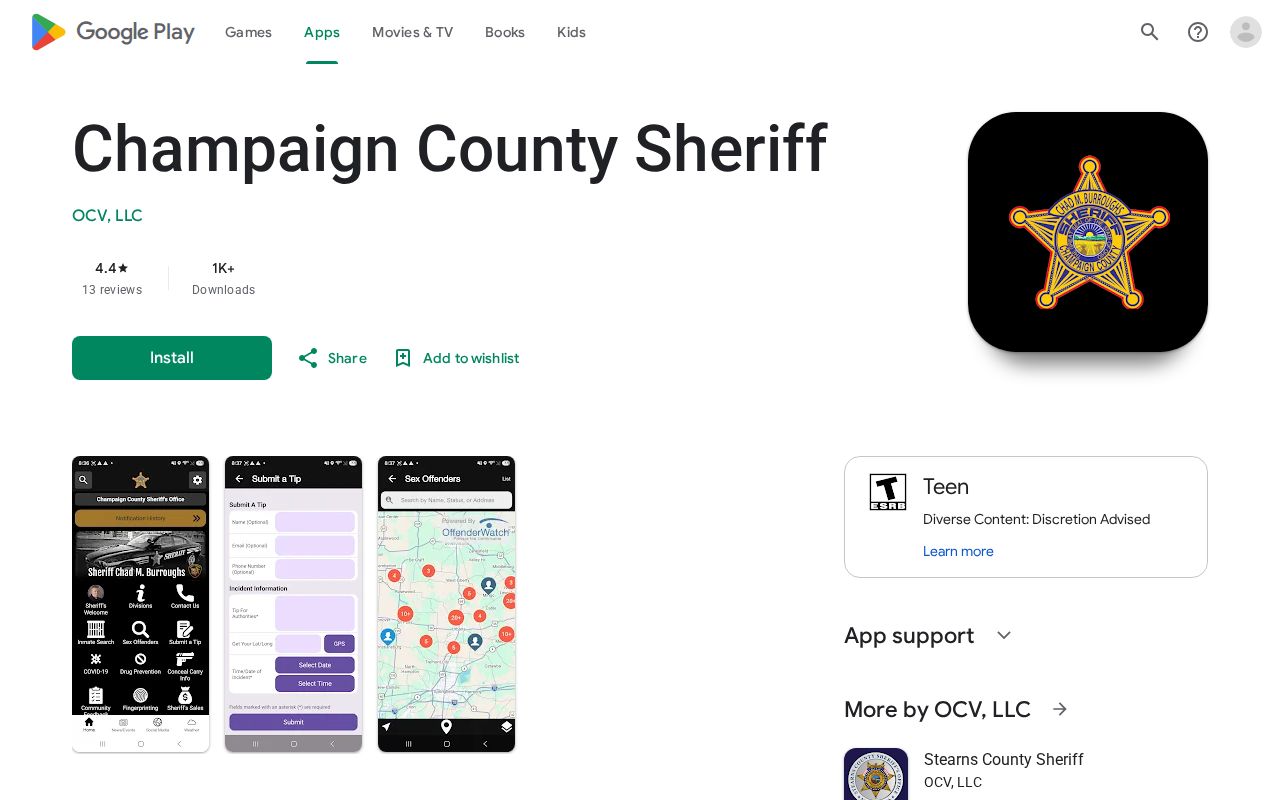
A store response also notes that jail information comes from the separate jail entity. That fits Champaign County's regional arrangement: the sheriff can hold arrest or incident records while Tri-County keeps the jail booking and release material. App reviews may hint at an inmate list, but they are not authority for current features. Inspect the live version before relying on any screen and never turn a current inmate list into a release archive.
Champaign Release Versus Transfer
“Released” should name a proven event. Bond, recognizance, dismissal, time served, or sentence expiration can lead to return to the community. Parole, post-release control, probation, community control, electronic monitoring, and WCCCF placement involve some form of continuing legal control. A transfer to ODRC, another jail, USMS, or ICE means physical custody continued elsewhere.
The key is destination. Request it where public, then follow the new custodian. A person still shown on Tri-County's roster remains within that feed's current scope. Someone missing from it may have left the facility, but the reason remains unknown until VINE, a court entry, or a jail record supplies an affirmative event. For a wider multi-day check, the Released Last 72 Hours guide explains how to frame the longer interval.
Public Record Search
Sponsored Results